
By Carla Gerryts, RD(SA) — Dietitian in Private Practice, Pretoria
September is Mental Health Awareness month. From soft whispers behind closed doors and “keeping problems private and in the family” to Gen Z proudly discussing their therapy insights during break, the conversation around mental health has become louder and bolder than ever before.
As we grow in our understanding of mental health conditions, an evolving body of research looks towards the intricate relationship between nutrition and mental health as a crucial point of intervention. Optimising nutrition as a preventative and treatment strategy is gaining traction — and might be the missing piece in your mental health puzzle.
Why Do People Struggling With Mental Health Often Have Difficulty With Nutrition?
For the person struggling with mental health, nutrition can become a contentious issue. It takes energy — physically and mentally — to buy and prepare food. For someone in the thick of a depressive episode, meal prep and following a recipe is close to impossible. The ability to plan and prepare balanced meals sits at self-actualisation on Maslow’s hierarchy of needs — an unrealistic expectation for someone in survival mode.
This often leads to a catch-22: nutritional status decreases, decreasing mental health, which further decreases nutritional status. The cycle can be broken by providing practical, realistic strategies to give the body the nutrients it needs.
The Research Speaks for Itself
One of the most compelling studies on this subject is the SMILES trial — a landmark randomised controlled study that demonstrated a Mediterranean-style diet significantly reduced depressive symptoms in people with major depressive disorder compared to a control group receiving only social support. Post-intervention, a third of participants in the dietary support group met the criteria for remission, compared to just 8% of the control group.
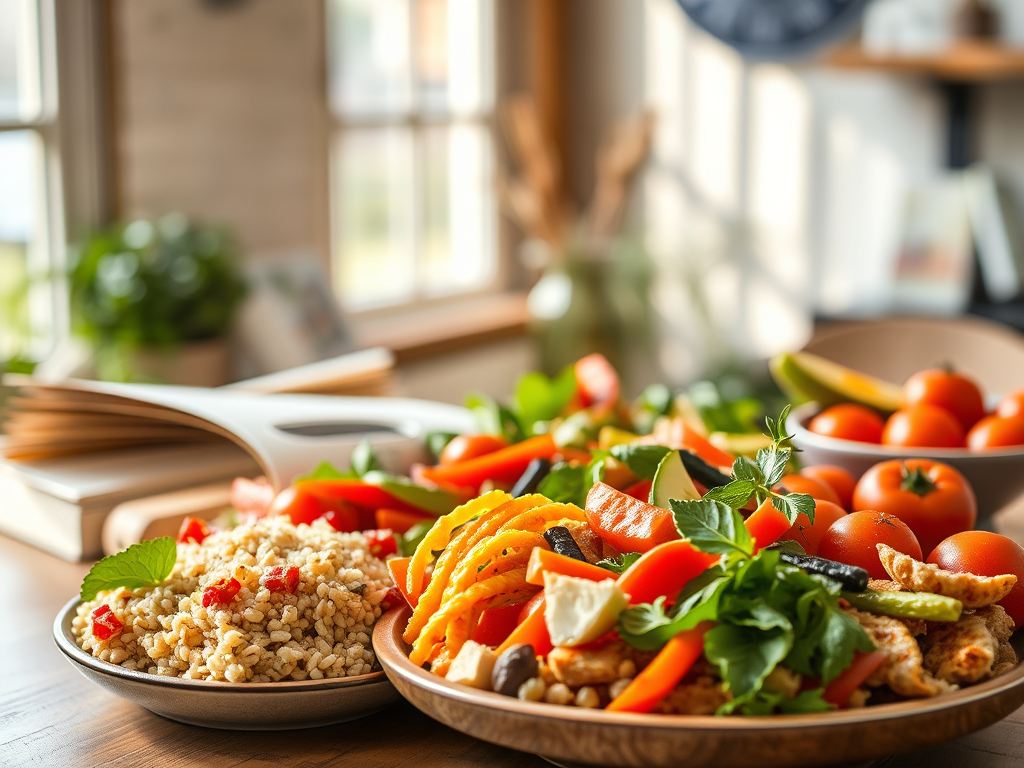
The Mediterranean diet — rich in whole grains, vegetables, fruits, lean proteins, and Omega-3 fatty acids — emerges as an excellent starting point for dietary modification. On the flipside, the Standard American Diet (SAD), high in refined carbohydrates, trans and saturated fats, sugar, and ultra-processed foods, is associated with an increased risk of mood disorders.
Specific Nutrients Worth Considering
Omega-3 fatty acids (EPA and DHA) support neuronal membrane fluidity and reduce inflammation. Supplementation is worth considering — vegan options are available in the form of microalgae.
B vitamins — particularly folate, B6, and B12 — are crucial for neurotransmitter synthesis. Deficiencies have been associated with poor energy levels and mood disturbances.
Vitamin D: Receptors are widespread in the brain, and low Vitamin D status has been associated with depressive symptoms. Living in South Africa does not guarantee sufficient levels — absorption and utilisation vary significantly between individuals.
Minerals such as zinc, magnesium, and iron are essential cofactors in neurotransmitter function. Deficiencies correlate with increased risk of anxiety and depression.
Polyphenols from plant foods exhibit antioxidant and anti-inflammatory effects, with emerging evidence for cognitive and mood benefits.
The Gut-Brain Connection
The gut-brain axis is a bidirectional communication system connecting the gastrointestinal tract and the central nervous system. The gut microbiota contributes to the production of neurotransmitters including serotonin, dopamine, and GABA, and influences immune function, stress reactivity, and inflammation.
Fermented foods — kombucha, kefir, yoghurt, and pickles — are encouraged to support a healthy microbiome. Dysbiosis, or an imbalance of gut bacteria, has been associated with anxiety, depression, and cognitive decline.
Key Takeaways
All points of intervention can be summarised in a single word: anti-inflammatory. Research increasingly describes depressive disorders as an inflammatory disease of the brain. Pro-inflammatory diets exacerbate oxidative stress and impair neuroplasticity. Anti-inflammatory diets, on the other hand, support resilience against stress and promote overall brain health.
If you don’t know where to start: optimise hydration, prioritise protein distribution, include Omega-3-rich foods, add complex carbohydrates high in fibre, and keep it simple. Small changes, big impact.
Carla Gerryts, RD(SA) is a dietitian in private practice based in Pretoria, Gauteng. With experience in psychiatric settings, she has a passion for helping people understand their own food story. Through a gentle but informed approach, she aims to unlock people’s natural ability to nourish themselves optimally.
🔒 CPD Assessment: This article is linked to a CPD-accredited assessment. Subscribe to the Clinician Edition to earn your CPD points.